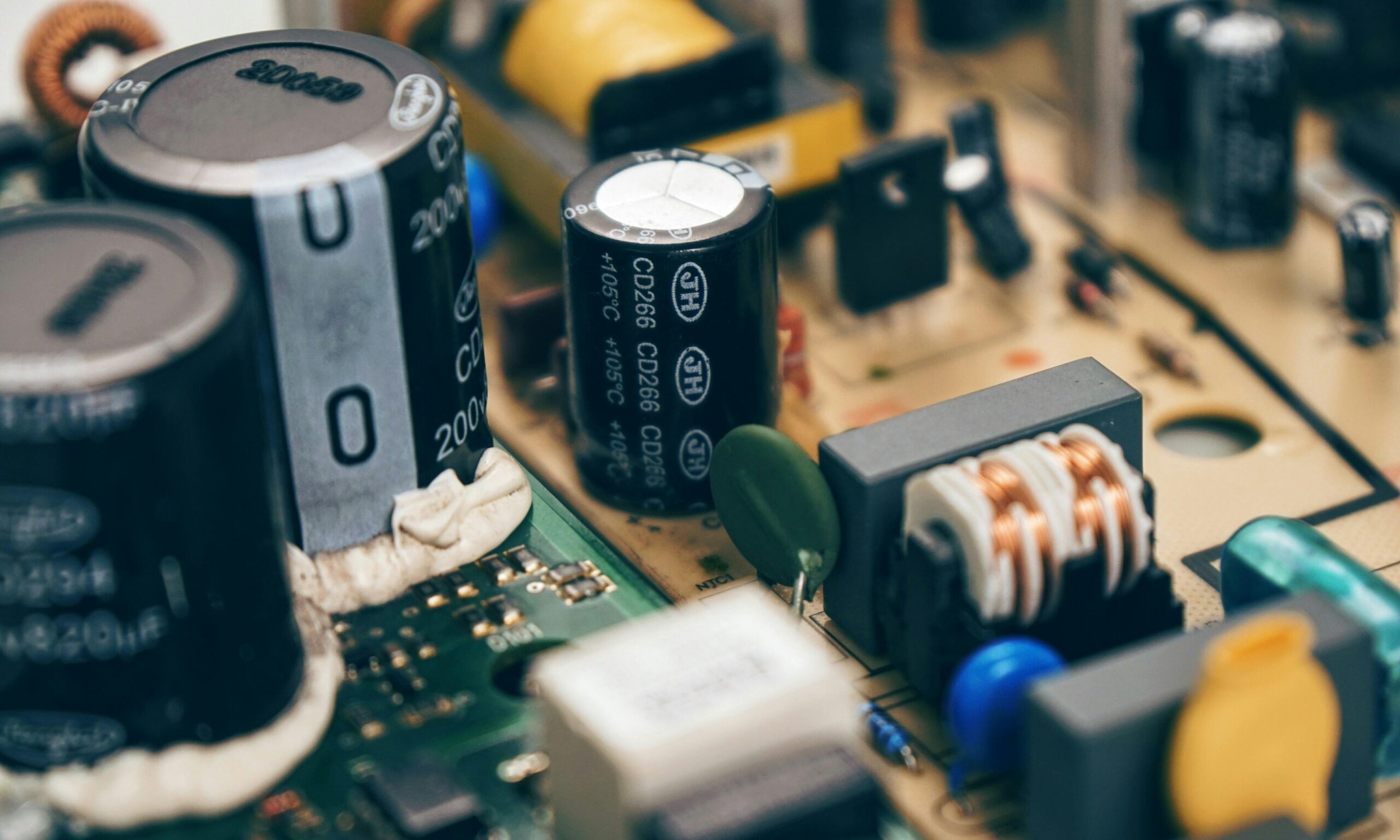
Capacitors are one of the most important building blocks of electronics. You’ll find them in almost every electronic circuit—from the flash in your camera to your laptop’s power supply.
But what does a capacitor actually do? In this guide, we’ll break it down simply:
What a capacitor is
How it works (the working principle)
Different types of capacitors
And its common applications in everyday electronics
By the end, you’ll see capacitors not as mysterious little cylinders, but as clever little “charge managers” that keep circuits running smoothly.
What is a Capacitor?
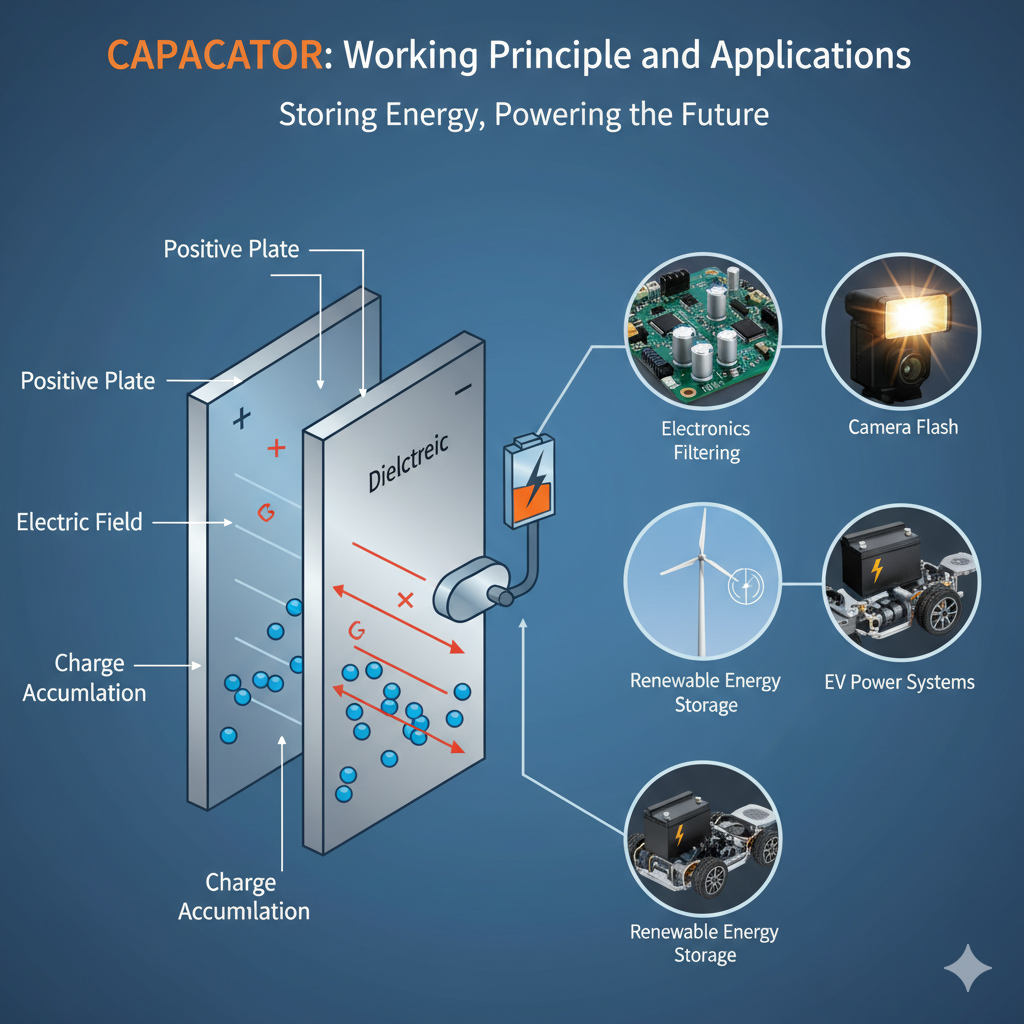
A capacitor is an electronic component that stores and releases electrical energy in the form of an electric field.
It’s made of two conductive plates separated by an insulating material called a dielectric. When you apply voltage, charges build up on the plates, and energy is stored. Remove the voltage, and the capacitor can release that energy back into the circuit.
👉 Think of a capacitor as a rechargeable bucket for electrons—it fills up, holds them briefly, then pours them out when needed.
Types of Capacitors
Different capacitors serve different purposes:
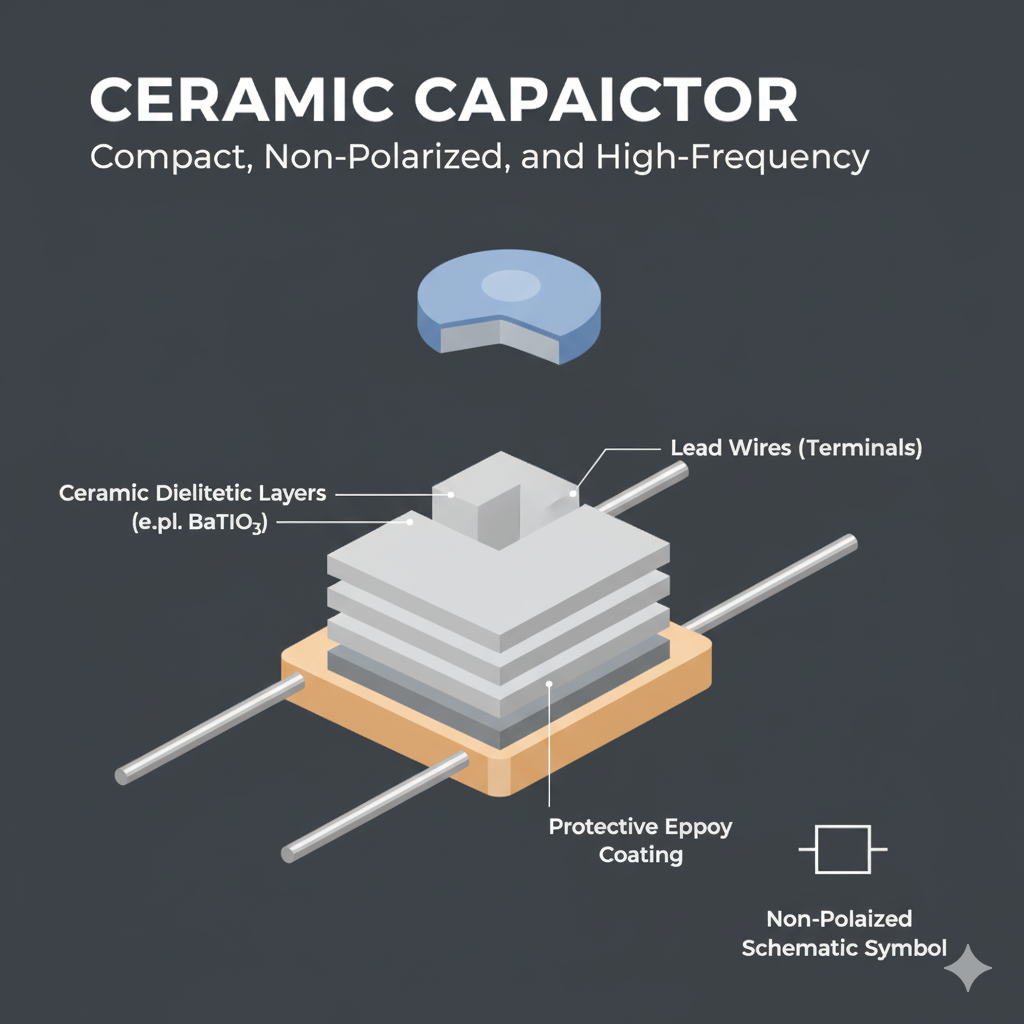
Ceramic Capacitors – Small, stable, commonly used in filters.
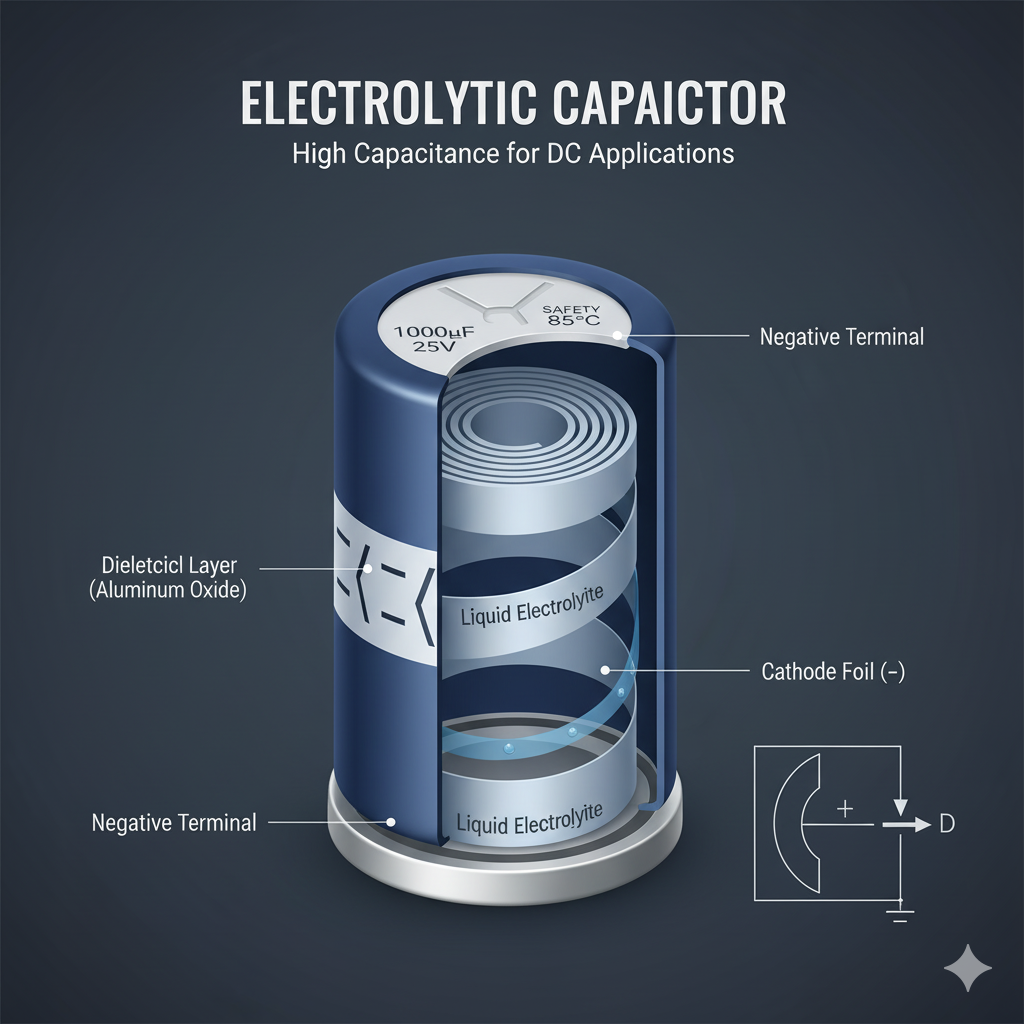
Electrolytic Capacitors – High capacitance, usually polarized, often used in power supplies.
Tantalum Capacitors – Compact and reliable, good for precision applications.
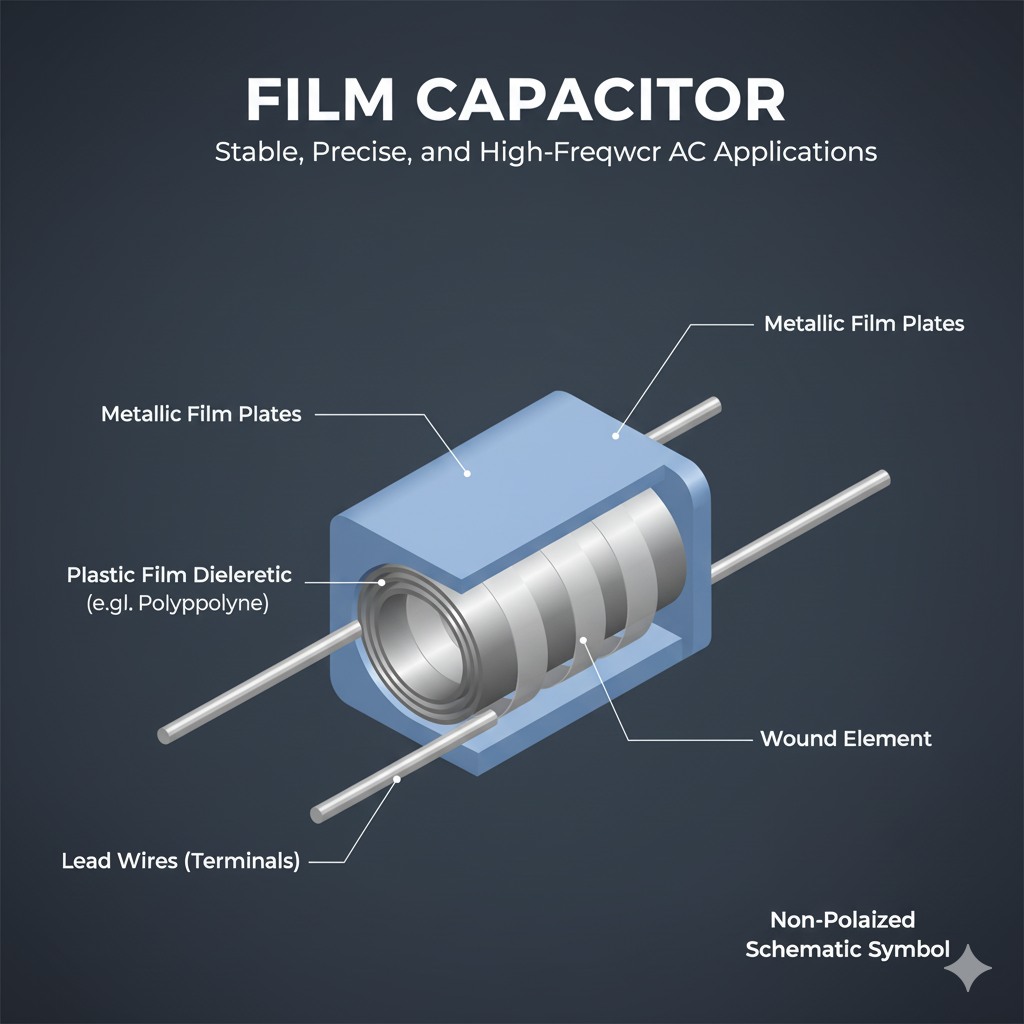
Film Capacitors – Low loss, used in AC circuits and audio electronics.
Supercapacitors – Extremely high capacity, used for backup power (can even replace small batteries).
FAQs
Q: What’s the unit of a capacitor?
A: Capacitance is measured in farads (F), but most everyday capacitors are in microfarads (µF), nanofarads (nF), or picofarads (pF).
Q: What’s the difference between a capacitor and a battery?
A: A capacitor stores energy quickly but discharges it quickly too. A battery stores large amounts of energy but discharges slowly.
Q: Can a capacitor work without a dielectric?
A: No—the dielectric prevents short circuits and determines how much energy a capacitor can store.
Everyday Examples of Capacitors
Camera Flash: Stores energy, then discharges it in an instant for a bright flash.
UPS Systems: Capacitors hold charge for a smooth transition when switching from mains power to backup.
Smartphones: Stabilize voltage in the charging circuit for battery health.
Air Conditioners: Use motor starting capacitors to kickstart the compressor.
Conclusion
Capacitors may look like tiny cans or discs, but they’re the powerhouse components ensuring electronics function reliably. Their ability to store, filter, and release energy quickly makes them indispensable. From smoothing voltage in your gadgets to powering industrial systems, capacitors quietly make modern life possible.